


Distance
31.2kmTime
35minsArchaeological site of ancient Mycenae
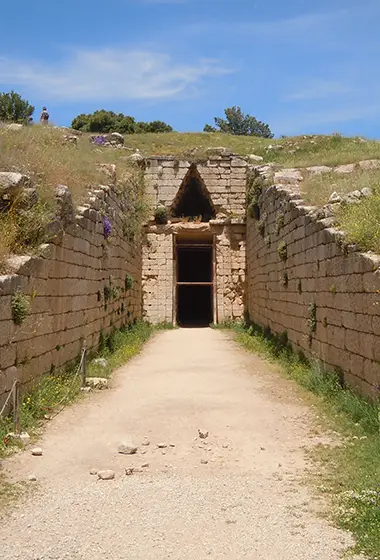
Today, the Mycenae is a tiny settlement northeast of the Argolida valley, home to roughly 450 people. In 1928, the community reclaimed its former name, Charvati. Today, the villagers are busy tending to their ancestors' land and providing services to the thousands of tourists that come to the area each day. The location is well-known around the world as one of the most significant archaeological sites. Its name is definitely associated with the ancient city of Mycenae, which served as the center of the first significant land-based Greek civilisation. People have lived on the slope of Mycenae from 2500 BC. When the Mycenaean civilisation flourished during the Late Bronze Age (1600–1110 BC), it was at its most prosperous. Perseus, the son of Zeus and Danae, is said to have created Mycenae and established the first Mycenae royal dynasty. Atreus was the first monarch of the Pelopid dynasty, which was succeeded by his son Agamemnon. The "king of many men," Agamemnon, was the leader of the Greek army in the conflict with Troy. Mycenae's citadel was well protected by both man-made and natural defences, and it was located in a key location. The city's location allowed it to manage and oversee trade with Egypt, Cyprus, Asia Minor, and southern Greece. The Mycenaean kings consequently amassed enormous wealth and power.
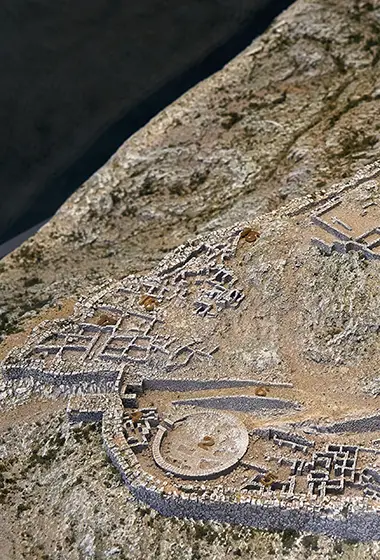
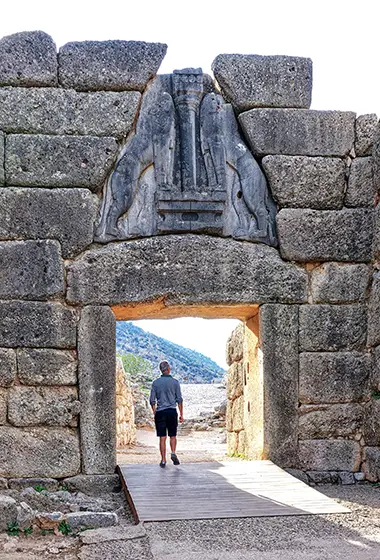
The fabled Cyclops constructed Mycenae. Mycenae's cyclopean walls were constructed in three stages. The original walls, which only included the highest portion of the hill, were built circa 1350 BC. The Lion Gate was constructed around 1250 BC, and the walls were significantly expanded. The last wall addition at Mycenae's northeastern end around 1200 BC contained the underground well that provided water to the fortress. As a result of the walls' extension, the citadel became enormous and had an excellent defence system. As a result, the Mycenaean people were able to establish an excellent transit system and prosper in trade. Midway through the fourteenth century BC, the city peaked. The city starts to deteriorate in the eleventh century BC, yet it is not entirely deserted. Mycenae's authority began to wane with the fall of the Egyptian market and the downfall of the state of Hittites, who were the only people who knew how to handle iron as early as the 17th century BC.
The Herakleid dynasty ultimately succeeded in destroying the city. There was only a tiny village remaining from the once-powerful stronghold. The Argeioi devastated Mycenae in 468 BC; it was restored in the third century BC but was quickly abandoned once more. Pausanias discovered the city abandoned in the second century AD, with the majority of its structures only partially covered in dust. Soon after Greece is freed from Turkish rule, the city will see its first excavations. Pittakis, an archaeologist, will discover the Lion Gate in 1841. Heinrich Schliemann, a pioneering archaeologist, conducted excavations in 1876 that uncovered much of the splendid history of the Mycenaean civilisation and confirmed the tales and legends told by Virgil and Homer. Christos Tsountas, another renowned archaeologist, will continue Schliemann's work starting in 1886.