


Distance
1.6kmTime
10mins from Tolo centreby boat
Venetian Fortification on Romvi Island
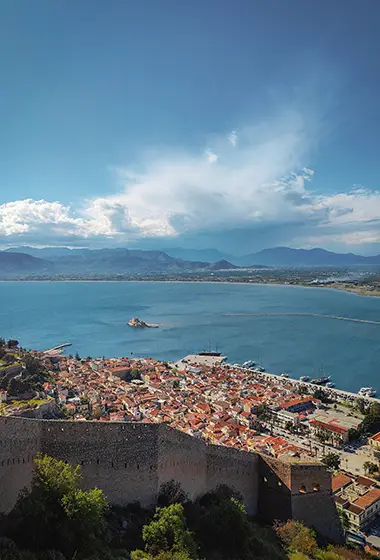
Slavic attacks plagued the Peloponnese at the close of the sixth and beginning of the seventh centuries. The fall of Sirmium, or modern-day Sremska Mitrovica, in 582 has been identified as the turning point for the start of Slavic expeditions and colonisation in Byzantine territory. Following the fall of Mauricius as emperor in 602, the Danube boundary dissolved, allowing Slavic forces to occupy European territories. The local community was undoubtedly terrified by these raids and temporarily fled their homes and hearths in order to protect themselves. The Argolid's residents adopted a similar strategy and sought safety on islands in the Argolid Gulf. The discoveries made at the Andritsa cave (skeletal remains, coins, vases, etc.) can be seen against this background, demonstrating the location's use throughout a dangerous period. The island of Romvi is one of these shelters where locals may have temporarily sought safety during the attacks at the end of the sixth and the beginning of the seventh centuries. Important officials had arrived on the island during the eighth and ninth centuries, according to numismatic and sealing evidence, and the diocese of Orovi (Romvi) had been established. The bishopric was established, most likely between 733 and 755, and it vanished shortly after, still in the eighth century. Residents and important officials may have been relocated in reaction to or as a direct result of the invasions that occurred in the sixth and seventh centuries. Later on, when a fortified naval post was built there during the Second Venetian period, the island of Romvi will be utilised once more.